
The ads make it look so easy. "Build a professional website in minutes! No coding required! Drag, drop, done!" And look — there's a version of this that's true. You can, technically, use Wix or Squarespace or GoDaddy Website Builder and produce something that looks like a website and technically works on the internet.
What the ads don't show is the montage where you spend three Saturdays arguing with a template because your logo won't center right. Or the part where you realize the site looks completely different on mobile. Or the moment six months later when you Google your own business and you're on page 4.
DIY websites aren't inherently bad. They're just often the wrong tool for a business that's trying to actually grow — and the real cost is usually hidden until it's too late to easily fix.

The Four DIY Website Problems Nobody Warns You About
1. You're an expert at your business, not at websites
A dentist could technically pull their own tooth. A chef could technically grow all their own food. Could and should are different questions. Website builders are built to be accessible, but accessible doesn't mean optimized. Getting a genuinely good result requires knowing things about SEO, conversion optimization, design principles, and user experience that most business owners don't have time to learn — and honestly shouldn't have to.
2. Your time has value
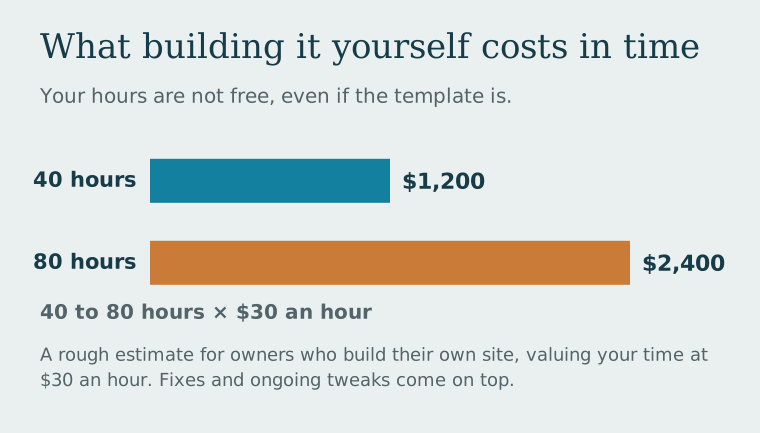
As a rough estimate, a business owner who builds their own website can spend 40–80 hours on it. If your time is worth even $30 an hour (almost certainly an underestimate), that's $1,200–$2,400 in time — spent building something that a professional would have done faster and better. And that's before accounting for the ongoing tweaks, fixes, and headaches.
3. DIY platforms are not built for local SEO
Wix, Squarespace, and similar platforms have improved over the years. But they still have structural limitations that make it harder to rank locally. They can add extra code that slows sites down, and they can limit how much you control technical SEO settings. None of this is a death sentence, but it's fighting uphill against a competitor who has a professionally built site on proper infrastructure.
4. You're renting, not owning
With most website builders, you don't actually own your website. You own your content, but the platform can change its pricing, go out of business, or restructure in ways that affect your site. If you leave, migrating is often painful or impossible. With a professionally built site on WordPress or a similar platform, your files, your data, and your design belong to you.
A common scenario: A business owner spends 3 months building a Wix site. It looks okay but doesn't rank on Google. After a year of no results, they hire someone to fix the SEO — who tells them the site architecture makes that very difficult. They end up paying to rebuild it professionally anyway. Total cost: the Wix fees + the time + the professional rebuild. A professional site from day one would have been cheaper.
When DIY Actually Makes Sense
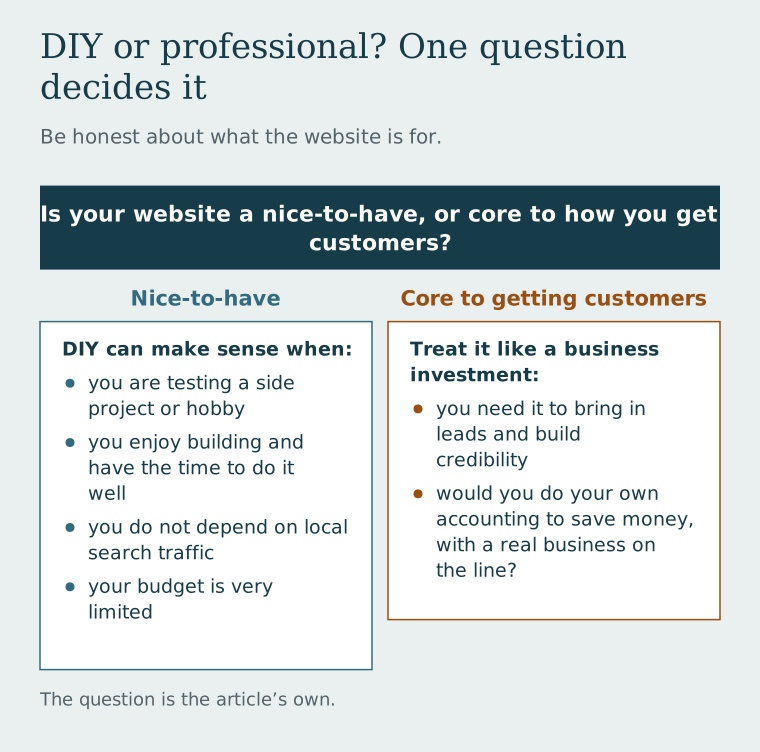
To be fair: there are situations where DIY is the right answer. It makes sense if:
- You're testing a side project or hobby business before committing to real investment
- You genuinely enjoy building websites and have the time to do it well
- Your business model doesn't depend on local search traffic
- You have a very limited budget and any online presence is better than nothing
The honest question to ask yourself: Is this website a nice-to-have, or is it a core part of how you get customers? If it's core — if you genuinely need it to bring in leads and build credibility — treat it like the business investment it is. Would you do your own accounting to save money if you had a real business on the line?
What to Look for in a Professional Web Designer
- They ask about your business goals before they talk about design
- They have examples of sites that are actually ranking locally
- They explain what's included in plain language
- You will own your domain and hosting
- They're still around after launch to help when things come up
A good web professional isn't selling you a pretty picture. They're building a business asset. The difference shows up in your analytics.
Tried DIY and still not seeing results?
This is a common story. Let's look at what you have and figure out the most efficient path forward — without starting from scratch if we don't have to.