
You did the thing. You got the website. You told people about it at the Chamber of Commerce mixer. You added it to your email signature. And then... crickets. The phone didn't ring. The form submissions didn't come. You refreshed your analytics, and it showed eight visitors — three of whom were you.
Here's the uncomfortable truth: a website that nobody can find is basically an expensive digital brochure that lives in a filing cabinet. The goal isn't just to have a website — it's to have one that Google actually shows people when they're looking for what you do.

That's what SEO (Search Engine Optimization) is about. And no, it's not magic. It's not a dark art. It's a set of things you either have or you don't — and most small business websites are missing most of them.
The Real Reason Your Website Is Invisible
Let's be honest: most small business websites are invisible on Google not because Google hates them, but because nobody told Google what the site is about, who it's for, and where it's located. Google isn't magic — it reads your pages like a very literal librarian who can only work with what's actually written down.
If your site says "Welcome to our business. We provide quality services to customers in the area." — congratulations, you've written the most useless sentence on the internet. Google has no idea what you do, what city you're in, or who should see your site. Neither does your customer.
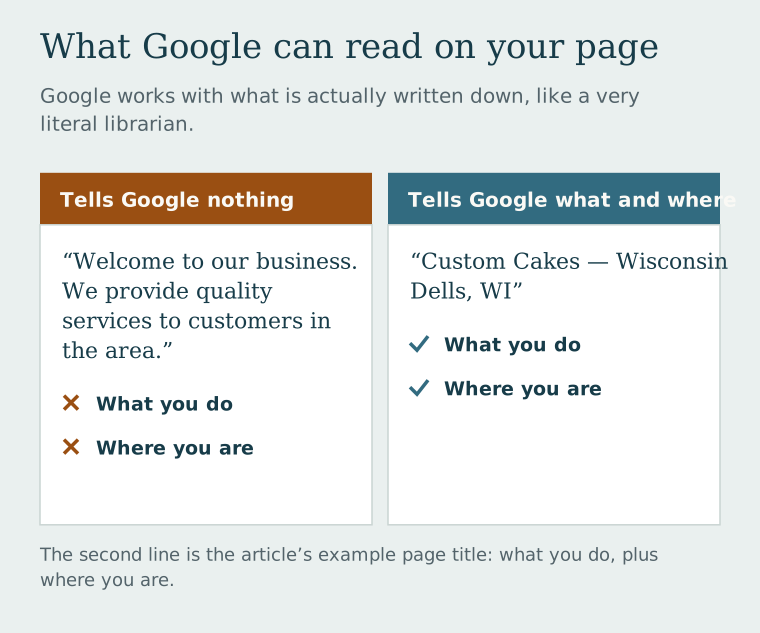
The #1 SEO mistake we see on local business websites: The business name is everywhere. The city is nowhere. If your site doesn't say "Baraboo" or "Wisconsin Dells" or "Sauk County" at least a handful of times in meaningful context, you are not competing locally on Google. Full stop.
The Local SEO Quick-Win Checklist
Here are the things that will move the needle fastest for a local business:
- Your city and state are mentioned naturally in your homepage copy
- You have a Google Business Profile that's claimed, complete, and has real photos
- Your address and phone number appear on your website (preferably in the footer of every page)
- Your page titles include what you do + where you are (e.g., "Custom Cakes — Wisconsin Dells, WI")
- Your site loads fast on a mobile phone (test at PageSpeed Insights)
- You have at least a few real customer reviews on Google
- You have not had your site built with frames, Flash, or any technology invented before 2010
- Your entire site is not one giant image with no actual text
Patience Required — But It's Worth It
Here's the part people don't love: SEO takes time. You won't fix your Google ranking overnight. A new website that's properly optimized often takes several months to really start climbing. The reason most businesses give up is that they try something for 3 weeks, see nothing, and conclude "SEO doesn't work."
SEO does work. It just works on Google's timeline, not yours. The businesses that show up at the top of local search results aren't smarter — they just started earlier and stayed consistent.
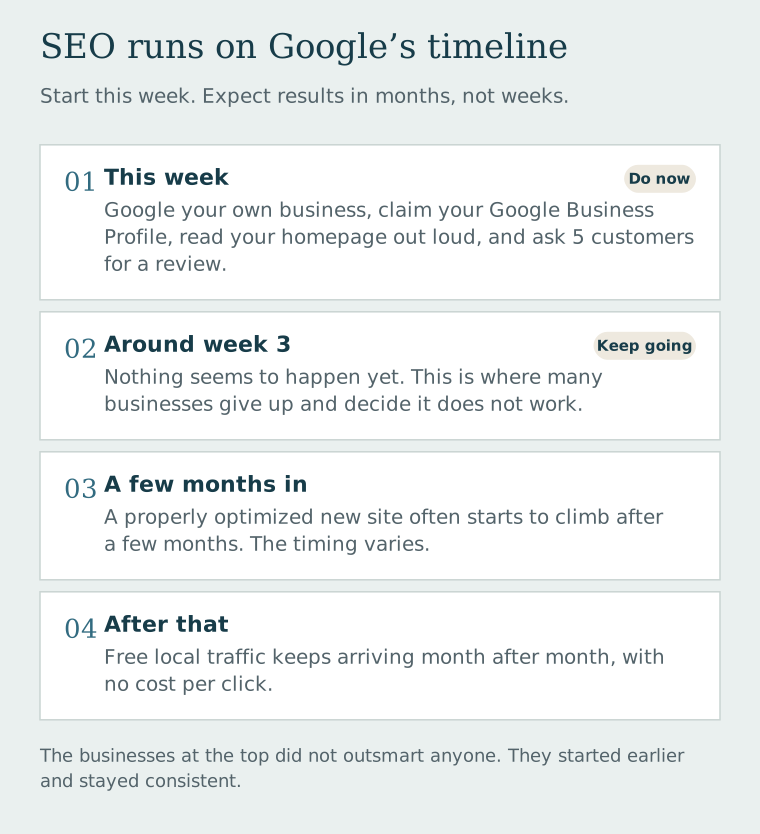
The compound effect of local SEO: Think of it like planting a tree. Terrible time to plant a tree: 10 years ago. Second best time: today. A website that starts ranking in your local market builds organic, free traffic that keeps coming month after month — without paying per click.
What To Do This Week
If you're reading this and nodding uncomfortably, here's your action plan:
- Google your own business. What comes up? What doesn't? Look at your competitors' results and note what they're doing differently.
- Claim your Google Business Profile at business.google.com if you haven't. Fill it out completely. Add photos. This alone can dramatically improve your local search visibility.
- Read your homepage out loud. If you couldn't tell someone what city you're in or what you do from the first paragraph, rewrite it.
- Ask 5 customers to leave a Google review. Reviews are a real ranking signal, and most happy customers will do it if you simply ask.
These four steps won't make you #1 on Google tomorrow. But they'll put you on a path that a lot of your competition isn't on — which is often all it takes in a local market.
Not sure why Google can't find you?
We offer a free website review that shows you exactly what's holding your site back from showing up locally.