
You hired someone. You had a kickoff call. Everyone was excited. Three months later, the new website is still "almost done," and the old one is still embarrassing you.
Stalled website projects are one of the most common frustrations business owners describe, and the reasons are surprisingly consistent. Web designers write about this all the time—Speckyboy has a whole piece on why web design projects come to a standstill—and the same few culprits keep showing up. Some are on the designer's side. Some, honestly, are on yours. Here is how to spot each one and get unstuck.

Culprit 1: The content isn't ready
Designers can build the structure of a website quickly. What they can't do on their own is tell your story: what you offer, where you work, what makes you different, and the photos that prove it. Waiting on text and photos from the business owner is one of the delays designers mention most often.
It isn't laziness. You are running a business, and "write the About section" keeps sliding to next week. Writing about yourself is also hard.
The fix: gather the essentials before the design work starts, not after. For a typical service business, that's:
- A list of your services, in the words your customers use
- Your service area and hours
- A few sentences on how you got started or why customers pick you
- 3 to 6 real photos of your work, your team, or your vehicles
- 2 or 3 genuine customer testimonials, with permission to use them
- Your logo, if you have one, and how you want people to contact you
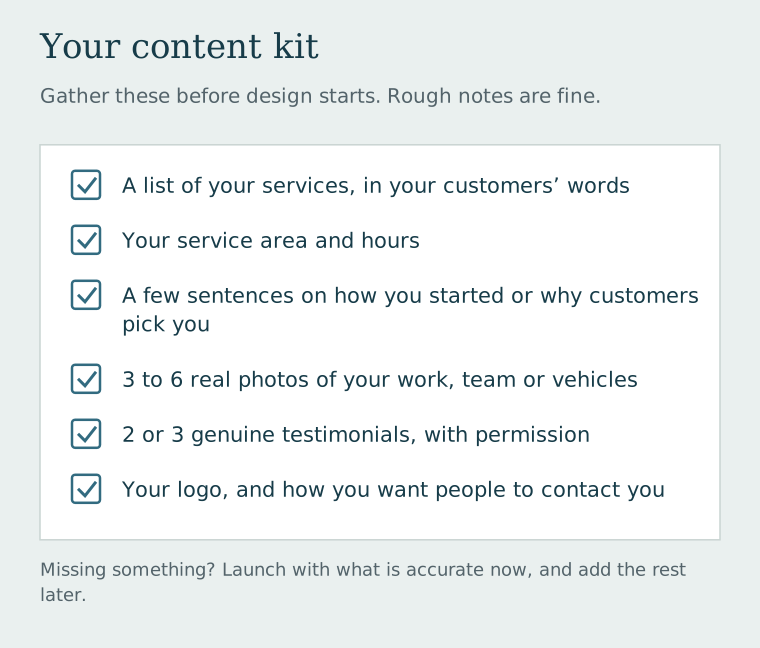
You don't need polished writing. Rough notes are fine. A good designer can shape plain notes into a clear page; they can't invent your experience.
Culprit 2: Feedback by committee
Your spouse has an opinion. Your business partner has an opinion. Your nephew who "does computers" has an opinion. Each round of feedback contradicts the last, and the designer is stuck waiting for everyone to agree.
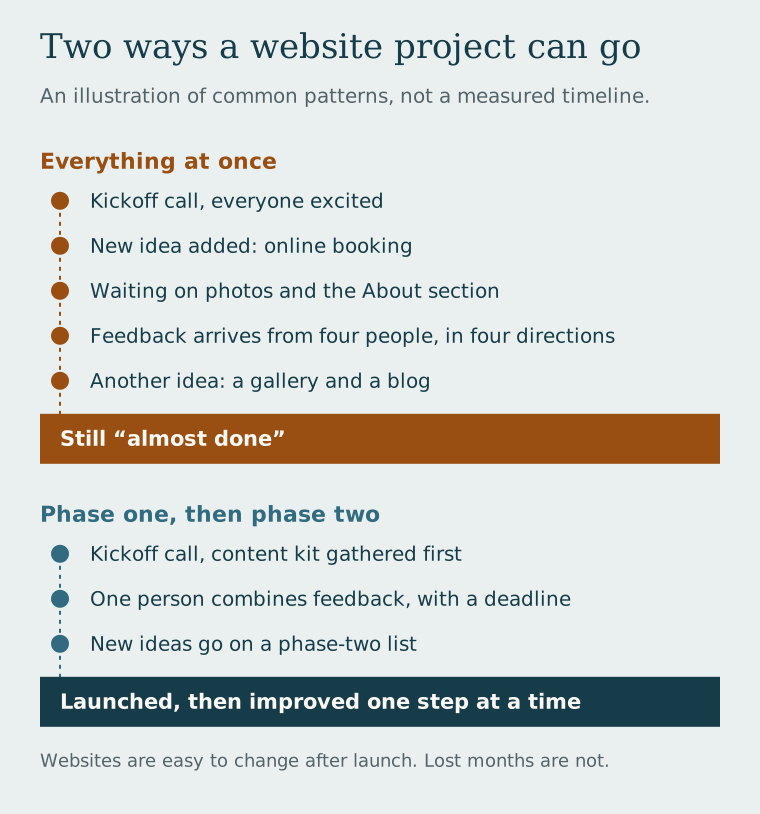
The fix: choose one decision-maker. Gather everyone's comments, but send the designer one combined list, and give it a deadline. "Here are all our changes; we'll need them by Friday" moves a project forward. A stream of separate texts over three weeks doesn't.
Culprit 3: Waiting for perfect
Some projects stall because the owner wants every photo, every sentence, and every detail perfect before anything goes live. Meanwhile, the old site—or no site at all—keeps losing customers.
The fix: launch what is good and accurate, then improve it. A clear, correct one-page site working for you today is worth more than a perfect five-page site that's still in progress next spring. Websites are easy to change. Lost months aren't.
Culprit 4: The project keeps growing
It starts as a simple site. Then someone asks, "Could we add online booking?" Then a photo gallery. Then a blog. Then a customer portal. Each idea might be good, but every addition pushes the launch further away and can quietly change the price.
The fix: keep a "phase two" list. When a new idea comes up mid-project, write it down instead of adding it on the spot. Launch the original plan, then decide which phase-two ideas are worth paying for once the site is live and you can see what customers actually use.
Culprit 5: The designer goes quiet
Sometimes the delay really is on the other side. Emails go unanswered, deadlines slip without explanation, and you can't tell whether anyone is working on your project.
The fix: ask for a simple written schedule at the start, with dates for both sides—when you'll deliver content, when they'll show you a draft, when you'll send feedback, and when it launches. Ask how quickly they usually respond to messages. If a designer can't give you a rough timeline or won't commit to response times, treat that as a warning sign before you pay a deposit.
How we keep projects moving at Dells Websites
We built our one-page website package partly to avoid the never-ending project:
- The scope is clear from the start. Your services, service area, hours, a business introduction, click-to-call and email links, and the photos and testimonials you supply. Bigger requests—more pages, an online store, booking tools—get a separate quote instead of quietly stretching the timeline.
- We ask for the right materials up front. You share your services, service area, hours, and any photos or genuine testimonials, and we help shape that information into a clear page.
- The timeline is realistic. A one-page site can launch in as little as one week. We confirm the timing for your project once we know what you need and what materials are ready.
- You don't have to get everything perfect before launch. Every monthly payment includes a change credit, and unused credits carry forward up to 12. Want to swap in better photos next month, or update a service description in the spring? That's what the credits are for.
- We answer. We respond to inquiries within 24 hours.
If your website project has been "almost done" for months, or you've been putting one off because it feels like it'll never end, tell us where things stand. Sometimes the fastest way forward is a smaller first launch.
Related reading: Your website should help you get more business. Start here.